
Small school districts face unique challenges like limited resources and staff but still must deliver on large expectations. They also hold a powerful advantage: deep community connections and the ability to make a big impact fast. CSBA is recognizing the work of these small but mighty districts through the Small Schools, Big Ideas blog series.
At just 17-years-old, Zachery Ramos saw a need to fill and legacies to honor through the creation of the Gustine Traveling Library. What began as a small project to honor the sacrifices of his father — an immigrant from Portugal who sacrificed his own academic ambitions to further those of this children — and a tribute to his late brother, the traveling library has just hit a milestone by distributing its 350,000th free book to youth in underprivileged communities.
Now a board member with the Gustine Unified School District, a district located in Merced County with 1,583 students, Ramos was able to grow the program by leaps and bounds with the support of fellow board members and the community at large. “Becoming a school board member gave me a deeper understanding of the needs students and families face, especially around literacy, access and opportunity,” Ramos said. “Since then, the work has grown through the support of volunteers, educators, community members, businesses and partners who believe that every child deserves access to books.”
The Gustine Traveling Library works with schools by providing supplemental support for students, teachers and families through activities such as literacy nights, classroom visits, book giveaways, student incentive programs, career and community events, and family-friendly educational activities.
“One of the biggest ways we now support schools is through our book distribution program,” explained Ramos. “Through the Gustine Traveling Library, we have been able to send free books to schools not only across California, but also to schools and communities across the United States. This is especially important for small, rural and underserved schools that may not always have the same access to large donations, community partnerships, grant-writing support or literacy resources. When we send books or supplies to a school, we are not just sending materials. We are sending encouragement, support and a reminder that their students matter.”
The work has grown over the years and the traveling library now also provides educational supplies, clothing, food, diapers, toys and other family resources.
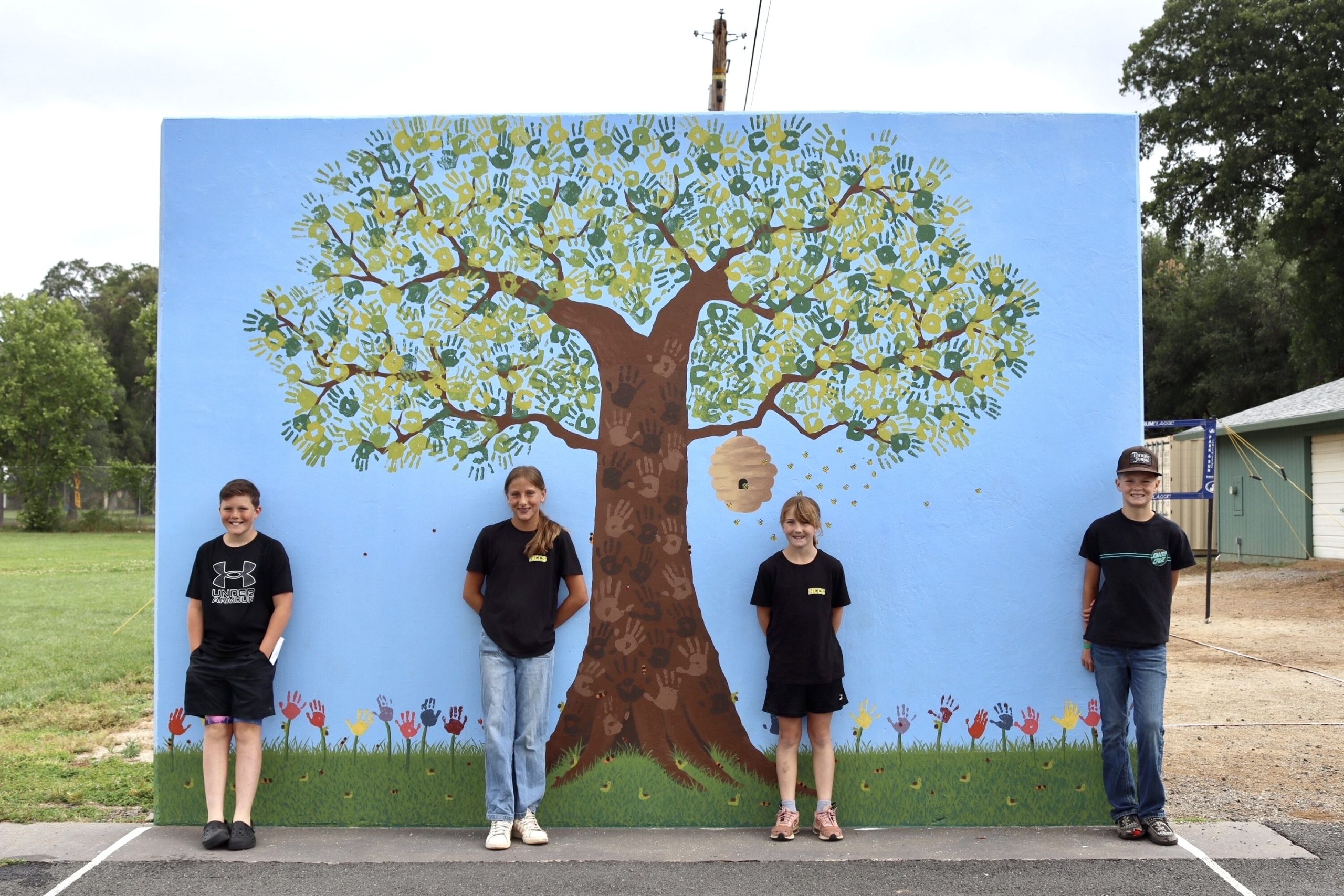
“A very special example of this work was our trip to North Cow Creek Elementary School in Redding. That connection happened through my service on the CSBA Small School Districts Advisory Workgoup,” Ramos said. “During one of our small school district meetings, I shared about the Gustine Traveling Library and the ways we try to be a resource for small and rural schools, whether through books, educational supplies, grant-writing support or other outreach. After that meeting, the superintendent-principal from North Cow Creek Elementary reached out to me and shared a project his fifth-grade students had been working on.
“Since their school did not have a library, the students had presented to their school board about wanting to place Little Free Libraries around their school site,” he continued. “My team and I began gathering hundreds of books, and we also worked to have a Little Free Library built to help kickstart their program. We then drove about four hours to Redding to deliver everything in person and meet with the students and staff.”
A related initiative born from the traveling library is the Read, Explore, Achieve, Dream (READ) Program, a sort-of public relations campaign for reading. The program features colorful posters featuring people from different backgrounds and fields holding books and sharing positive literacy messages. The goal is for students to see that reading is connected to every kind of future: public service, business, education, art, culture, journalism, leadership and more. Posters are distributed in schools, libraries, businesses and community spaces “so students constantly see the message that reading matters and that their community believes in their dreams,” Ramos said.

“One of the most meaningful parts of the work has been seeing how families respond to having a place where books, learning, and community support are offered in a welcoming way,” he continued. “Many people do not see the traveling library as just a book giveaway. They see it as a place that cares about children’s education and wants families to feel supported.”
Now with a headquarters space of its own, the traveling library also has a stable location. “The most important response, though, comes from the children themselves,” Ramos concluded. “It is hearing a child talk about how much fun they had at the headquarters, or seeing a student excited about a new book after a school visit. Those moments are what keep the work focused. The letters, awards and public recognition are deeply appreciated, but the real measure of success is whether children feel welcomed, supported and excited to read.”