
The Oct. 22-23 meeting of the California Commission on Teacher Credentialing (CTC) saw only one action item regarding implementation issues candidates are experiencing with the newly adopted Child Development Permit structure. The commission also received several key updates about teacher performance assessments and met in […]
Author: Kimberly Sellery
Hispanic Heritage Month spotlight: 80-year anniversary of landmark California desegregation case
In the 1940s, more than 70 percent of all Mexican American students in California attended “separate but equal” schools, but one court case changed that: Mendez v. Westminster (1946). Appalled that their three children — who were all fluent in English — were not permitted […]
California School News Weekly Update: October 9, 2026
This Weekly Update provides members with the latest news from the association as well as important education-related developments. CSBA was recently the subject of a malicious cyberattack resulting in outages to some internal systems, including the primary CSBA website, training registration and email marketing systems. […]
Research paper identifies best practices for school closures
A recent research paper by the National Demographics Corporation, a CSBA Business Affiliate, outlines best practices for closing schools in response to factors like declining enrollment, underused facilities, staffing challenges, aging campuses and tight budgets. “Closing Schools Without Breaking Trust: Best Practices for California School […]
Report finds lack of career navigation help for students despite rise in pathways
A report released this summer by FutureEd examines the disconnect between new career pathways being offered in U.S. high schools and the lack of guidance provided to students to take advantage of these opportunities.
Commission on Teacher Credentialing considers new exam options
At the Aug. 26-27 meeting of the California Commission on Teacher Credentialing (CTC), commissioners acted to approve some actions related to exploring new foundational exams, and were provided updates on ongoing projects related to teacher apprenticeships and dual credentialing in general and special education. Commission-approved […]
Study finds school districts spend more on high-poverty districts on average
A June report from Brookings Institute reviews how school funding has changed through the decades using school district level data from1976 to 2021. Researchers aimed to answer two key questions: Do high-poverty and predominantly non-white districts spend less than their lower-poverty or predominantly white counterparts? […]
CSBA, school and public agency leaders hold press conference to urge Legislature to reform AB 218
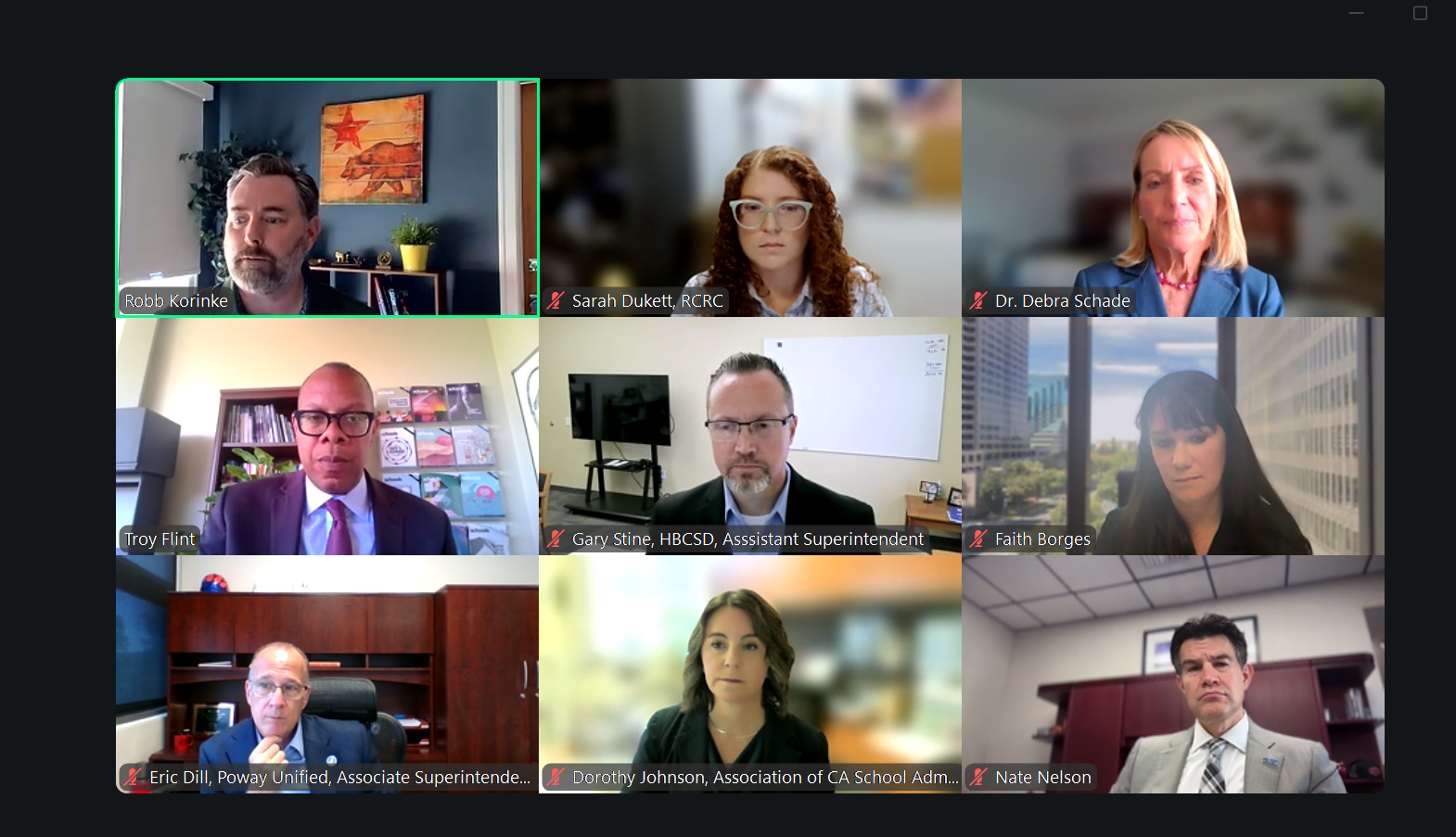
As California lawmakers consider reforms to Assembly Bill 218 in the final weeks of the legislative session, leaders representing school districts and public entities across the state held a virtual press briefing on Aug. 20 to discuss reforms that would preserve survivors’ ability to seek justice while establishing reasonable safeguards against unlimited publicly-funded liability. The event featured representatives from school districts, CSBA, the California Association of Joint Powers Authorities, the Association of California School Administrators, the California Association of School Business Officials and the Rural County Representatives of California.
Addressing teacher shortages in California
The Learning Policy Institute explores trends in California’s teacher workforce supply in a new brief, “California’s Teacher Shortages: Trends in Supply, Demand, and Turnover.” Using data from the California Department of Education (CDE) and the state Commission on Teacher Credentialing (CTC), researchers determined that turnover […]
Arvin Union SD touts big improvements in attendance
A recent webinar hosted by Education Week and SchoolStatus highlighted attendance strategies that helped Arvin Union School District improve its attendance with a 43 percent reduction in chronic absenteeism. In the 2024–25 school year, Arvin Union SD had a chronic absenteeism rate of 15 percent. […]