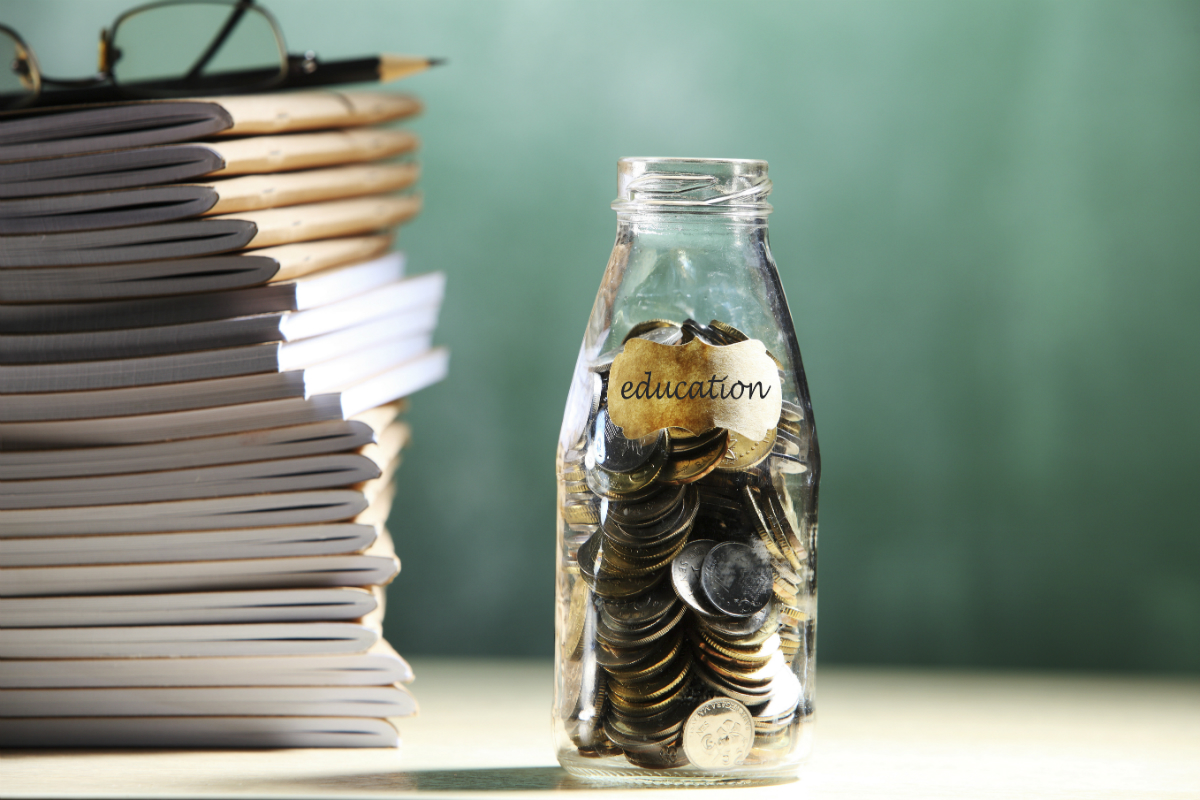

A June report from Brookings Institute reviews how school funding has changed through the decades using school district level data from1976 to 2021. Researchers aimed to answer two key questions: Do high-poverty and predominantly non-white districts spend less than their lower-poverty or predominantly white counterparts? […]
Category: Funding & Finance
Funding & Finance
Legislators introduce a new, last-minute attack on Prop 98
In the final days of budget negotiations, a new and alarming threat to Proposition 98 has emerged: a proposal to fold the private provider portion of the state’s preschool program into the same Prop 98 allocations that have traditionally supported TK–14 public schools.
The Education Coalition presses Legislature to reject Prop 98 withholding at press conference
In a demonstration of unity, California’s leading education organizations representing administrators, classified employees, county superintendents, parents, school board members, school business officials and teachers convened on the West Steps of the State Capitol on May 21 to urge the Legislature to reject Gov. Gavin Newsom’s proposal to withhold $3.9 billion owed to public schools.
Gov. Gavin Newsom presents his last May Budget Revise
The May Revise contains welcome provisions that will benefit public schools, including a 4.31 percent COLA for LCFF and a $2.4 billion ongoing increase for special education. Unfortunately, the Governor’s proposal masks an underfunding of the Prop 98 school funding guarantee and relies on the prolific use of one-time money to inflate funding levels in the short term without providing the stability and predictability schools need to plan effectively for student support.
CSBA convenes statewide education leaders at press event to demand Prop 98 be protected
Local educators, school board members and students gathered at Washington Unified School District’s River City High School on May 5 and urged state leaders to reject efforts to shortchange education funding by $5.6 billion in the 2026–27 State Budget. Gov. Gavin Newsom’s proposal would withhold over $900 per student from California’s public schools, forcing difficult cuts in classrooms and communities across the state, creating hardships for students and placing obstacles in the path of academic progress.
Research shows how small-time fraud leads to large losses in schools nationwide
A couple bucks here, a few dollars there — it all adds up to about $49 million in losses for local educational agencies, according to a report released by KEV Group, a provider of K-12 school finance management solutions.
Time is running out to secure federal energy incentives
By Thomas Jackson and Bruce Dickinson Across California, public agencies have invested in energy modernization projects, including solar, battery storage and energy efficiency, to cut operating costs and protect their budgets against rising utility rates. The Inflation Reduction Act (IRA) provides substantial tax credits in […]
California improves ranking in all measures of school finance
Education Law Center’s Making the Grade report is an annual overview of school finance in the United States. The current report presents a picture of school funding in the 2022–23 school year, the most recent data available. The report provides a comparative analysis of the […]
U.S. school facilities need vastly increased state and federal funding
Despite local educational agency efforts to ramp up investments in school facilities, the U.S. now faces an annual $90 billion shortfall in school facility funding after years of massive, chronic underinvestment, according to a recent report from the 21st Century School Fund, International WELL Building Institute (IWBI) and the National Council on School Facilities.
New report outlines current early education and child care policy and spending by state
The National Women’s Law Center on Jan. 9 published the report, Progress and Setbacks: State Child Care and Early Education Updates 2025, which examined depleting federal support for the child care sector and how it has impacted state spending.