
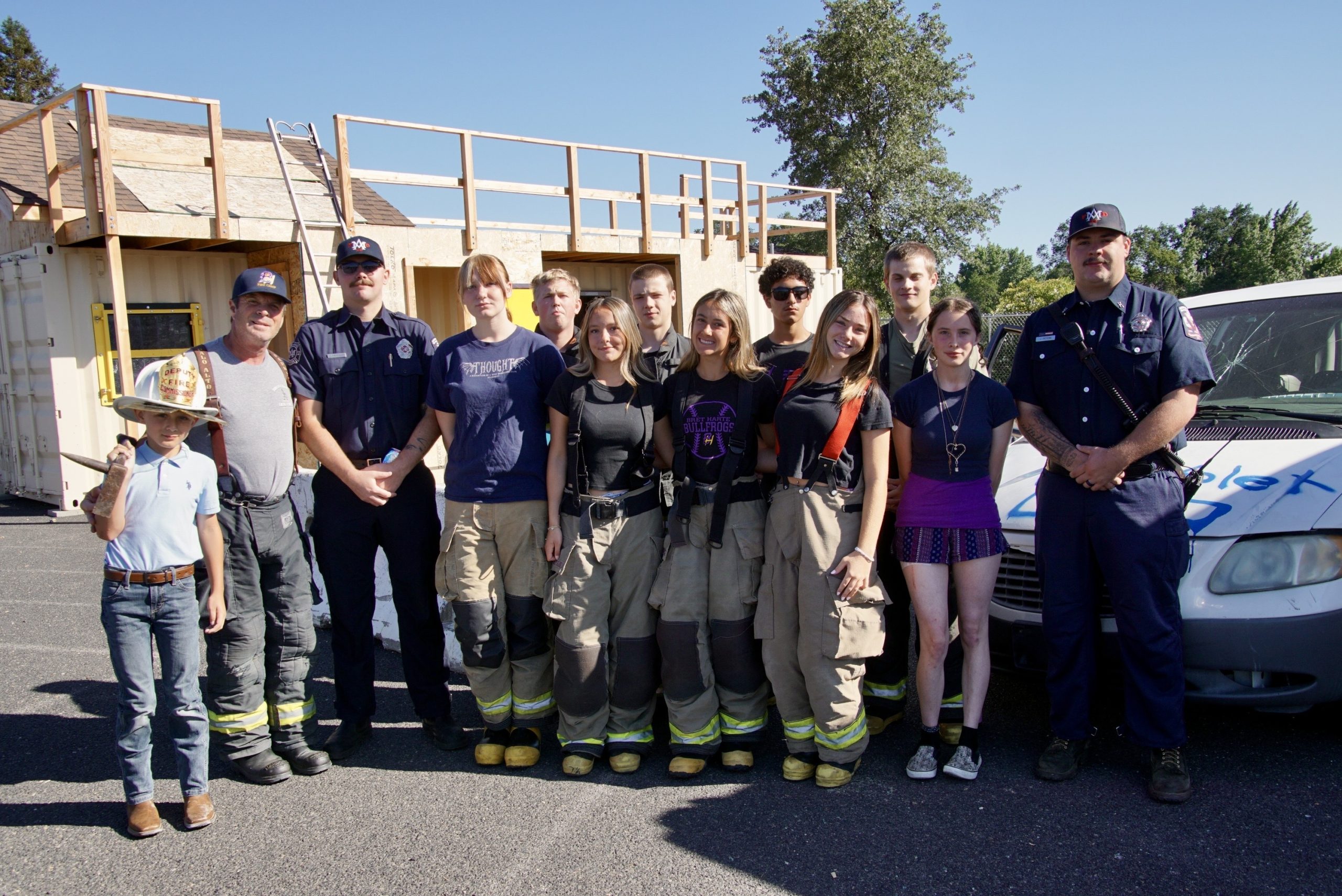
Bret Harte Union High School District’s Fire Technology Program launched in 2022 to help prepare students for in-demand careers in fire and emergency medical services close to home. Located in a rural community surrounded by forest in Calaveras County, the program currently serves 30 of the approximately 600 students enrolled in the district.
The program has already seen success, with some graduates working for nearby fire departments.
On May 13, CSBA Public Affairs and Community Engagement Representative Stephen Reid toured the transportation facilities and spoke to Fire Tech instructor John Parks to learn more about how the Fire Technology Program is supporting students and the greater community. CSBA is recognizing the exceptional work of small districts through the Small Schools, Big Ideas blog series.
The following conversation has been edited for length and clarity.
Can you explain how the program works and why it was started?
The Bret Harte High School Fire Technology Program was rebuilt to return students to a true hands-on career technical education (CTE) learning environment while integrating the technology and expectations of today’s fire service. The program focuses on practical skills, teamwork, leadership, integrity, confidence building and real-world fire service operations instead of relying heavily on classroom-only instruction. Students train with realistic props, drill-ground evolutions, rescue scenarios, ventilation training, tool use, communications and incident-based learning designed to mirror the fire academy environment.
The program was started because there was a clear need to rebuild a strong local pipeline for young people interested in fire service careers and public safety professions. Many students learn best through hands-on application, structure, accountability and mentorship. The goal was to reconnect education with the traditional Regional Occupational Program (ROP) and CTE model that historically produced highly capable firefighters, tradespeople and public servants. At the same time, the program introduces students to modern fire service technology, safety practices and professional expectations. An additional component is the Kids Fire Camp, which introduces elementary students to fire safety, teamwork, confidence and career exploration at an earlier age. Together, these efforts create a continuous pathway from elementary school through high school graduation and directly into college fire academies and public safety careers.
What short- and long-term outcomes would the district like to see among students who participate in the program?
In the short term, the district wants students to develop confidence, integrity, discipline, communication skills, teamwork and leadership while improving school engagement and attendance. The program is designed to help students discover purpose and direction through structured, hands-on learning. Students gain exposure to real-world career expectations, certifications, physical fitness standards and professional accountability.
Long term, the goal is to establish a sustainable career pipeline into fire service, emergency medical services, public safety, skilled trades and related college pathways. The program aims to prepare students to transition directly into fire academies, community college programs and employment opportunities after graduation. Beyond career placement, the program seeks to develop productive, community-minded young adults who understand service, responsibility and leadership regardless of the profession they ultimately choose. The district also hopes the program strengthens community relationships by reconnecting students, families, local agencies and businesses through mentorship, volunteerism and public service activities.
What challenges has the district experienced with the program and how did you overcome them?
One of the largest challenges was rebuilding a program that had become outdated and lacked the facilities, equipment and training environment needed to fully engage students. Funding for hands-on training props, equipment, classroom improvements and operational supplies was a significant hurdle, particularly for a small rural school district. Another challenge was changing perceptions about CTE. For many years, hands-on programs were often undervalued compared to traditional academic pathways. Rebuilding support required demonstrating that modern CTE programs provide meaningful career opportunities, college pathways, leadership development and life skills.
The program overcame these challenges through community partnerships, volunteer support, donations, collaboration with fire agencies and a strong commitment from the district and staff to build the program incrementally over time. The district embraced a “build as we go” approach, creating training props, developing curriculum, expanding opportunities and continuously adapting based on student engagement and workforce needs. Staffing and sustainability remain ongoing challenges, but the success of student participation, community support, and visible outcomes has helped create momentum and long-term support for the program.
How has Bret Harte Union HSD benefited from the program?
The program has positively impacted school culture, student engagement and community involvement. Students who thrive in hands-on environments have found a place where they feel motivated, connected and successful. The program has improved confidence, accountability, attendance and participation among many students who may not traditionally excel in a standard classroom setting. Teacher morale and student pride have also increased because students are participating in meaningful, purpose-driven work that produces tangible results and real opportunities after graduation.
The district has also benefited by creating a unique and highly visible program that connects education directly with workforce development and community service. The Fire Technology Program has strengthened relationships with local fire agencies, community organizations, families and business partners who support the students and recognize the value of preparing the next generation of public servants. The Kids Fire Camp has further expanded the program’s reach by creating early community engagement and positive interactions between younger students, high school mentors and public safety professionals. It has helped build excitement around education, teamwork and service at an early age.
What advice do you have for other small local educational agencies that want to establish a program like this?
Work with industry partners and retired firefighters who want to give back to the community and are passionate about training the next generation of first responders and public safety officials.
What are the district’s plans for the program moving forward?
The long-term plan is continued expansion and refinement of the Bret Harte Fire Technology Program into a fully developed regional CTE and public safety pathway. The district intends to continue strengthening partnerships with colleges, fire academies, local fire districts and industry professionals to provide students with direct career and educational opportunities after graduation. The program will continue focusing on hands-on learning, integrity, confidence building and practical workforce preparation while adapting to the evolving needs of both students and the modern fire service.
Future goals include expanding training props and facilities, increasing student enrollment, adding certifications and advanced curriculum opportunities, and enhancing dual enrollment or articulated college credit pathways. The district also plans to continue developing the Kids Fire Camp as an early recruitment and educational tool that introduces younger students to public safety, teamwork and leadership. The overall vision is to create a sustainable model that can serve as an example of how small rural schools can successfully rebuild meaningful CTE programs tied directly to community needs and workforce development.