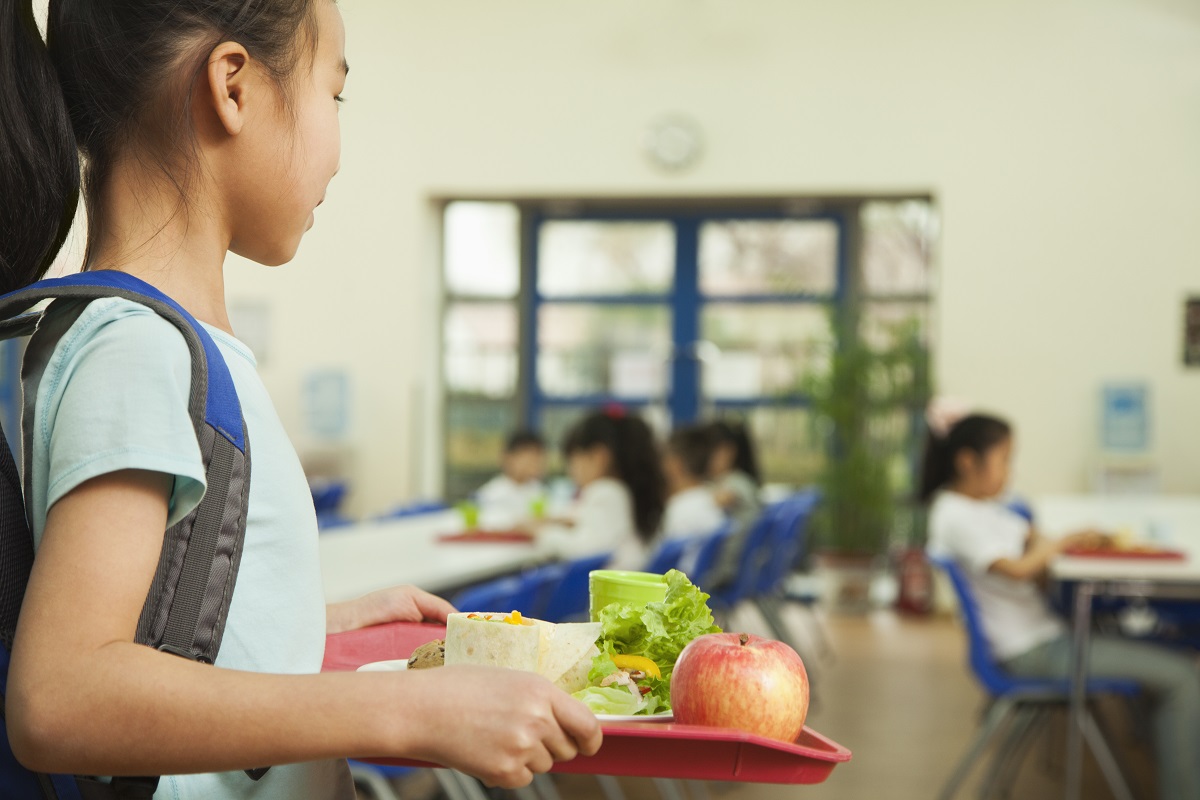
Students across the country could lose access to free school meals under cuts to funding and other policy provisions included in the One Big Beautiful Bill Act (OBBBA), according to a July 7 report from the Center for American Progress.
During the 2024–25 school year, more than 49,000 public schools participated in the Community Eligibility Provision (CEP), a federal program that allows local educational agencies in high-poverty areas to serve free meals to all students. Nearly 34 million students nationwide qualified for free or reduced-price meals through individual eligibility or their schools’ participation in CEP.
Under CEP, an LEA can serve free meals to all students if at least 25 percent are identified as eligible for direct certification based on their or their families’ participation in Supplemental Nutrition Assistance Program (SNAP), Food Distribution Program on Indian Reservations, Temporary Assistance for Needy Families, programs under the Runaway and Homeless Youth Act, Head Start or Medicaid.
The OBBBA introduced significant cuts to SNAP and Medicaid and imposes new barriers and restrictions for people trying to access the programs — factors that have already reduced participation and, in turn, make it harder for children to access school meals, according to the report.
“When children lose access to SNAP or Medicaid, they may also lose their direct certification for free school meals, leading to potential delays in service as schools and families navigate applications and wait times,” the report states. “They could also lose their eligibility for free school meals altogether, despite no change in their family income. If a school or district drops below 25 percent of its student population directly certified, it loses eligibility for the CEP, taking away access to free school meals from an entire school or district and reducing federal meal reimbursements to schools.”
Additionally, declining CEP participation will lead to increased administrative burden on school staff, the return of applications and income verification, and renewed stigma that can deter participation, according to the report. Researchers determined the following snowball effect would occur: reduced funding will strain school nutrition programs, making it harder to maintain staffing and food quality; under the OBBBA’s new cost-share model, other state-level investments such as state-funded universal free school meal programs will likely suffer; there will be negative implications for student health, attendance and overall academic outcomes as more children go hungry.
“While the negative effects are substantial, states can still take steps to mitigate the harm by protecting essential basic-needs programs, simplifying access, and strengthening local partnerships,” researchers wrote. “Ensuring students continue to receive nutritious meals is critical — not only for their well-being but also for their success in the classroom and beyond.”
What states can do to support students and LEAs
Noting that strained state budgets are already making it difficult to mitigate cuts to federal services, the report calls on state leaders to help alleviate the impact on access to school meals wherever feasible. Recommendations include:
Protecting existing state universal free meal programs. Nine states, including California, currently operate state-funded universal school meal programs to provide free meals to all students regardless of family income, often by coupling federal funding received through the National School Lunch Program (NSLP) and School Breakfast Program (SBP) with state funds to cover the additional costs. “States with existing universal school meal programs should prioritize maintaining these programs to ensure their students continue to receive free access to healthy meals during the school day, regardless of changes to their eligibility for other nutritional programs,” according to the report. “As children face potential loss of nutritional programs at home, it will be critical to ensure students have access to free and healthy food while at school.”
Strengthen direct certification and simplify school meal application processes. States should help districts and schools improve their direct certification practices and simplify their school meal application processes to ensure that every eligible child receives free or reduced-price meals. Doing so will increase individual free school meals access as well as schoolwide access through the CEP.
States can also bolster their current direct certification efforts by ensuring systems are in place to extend eligibility to all children in a household, increasing the frequency of direct certification matches, improving data-matching systems to use all available data, and providing training for school staff to identify vulnerable children.
Additionally, to improve access, online and paper applications should be available in multiple languages and should be included in the distribution of mandatory forms at events such as back-to-school nights and parent-teacher conferences. “Application materials should also be simplified to make clear what information is necessary and what is optional, with explicit confidentiality language that explains protections and clearly states that a Social Security number is not needed to complete the form,” the report states. “Using community sites and sending frequent reminders can also help increase application completion, ultimately providing access to nutritious meals to more children.”
Supporting partnerships with local farmers and community gardens. At the local level, LEAs should consider expanding structured partnerships between their local school districts, farmers and community-based programs such as school gardens through farm-to-school initiatives and local procurement contracts. States can support these efforts by investing in and encouraging these partnerships by coordinating statewide networks, setting goals, providing training and developing tools to connect schools with local producers.