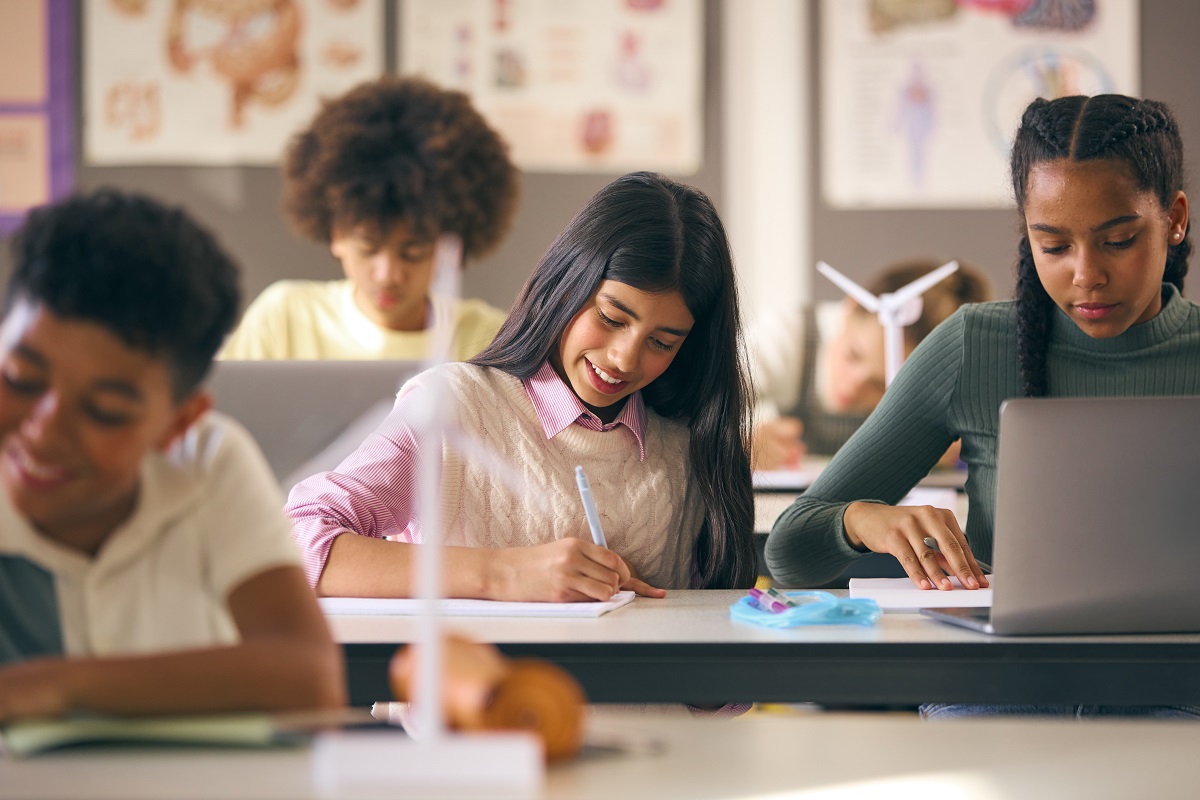
In 2024–25, two-thirds of English language arts teachers at the secondary level (67 percent) intended to have students read between one to four full fiction or nonfiction books, according to the RAND Corporation’s May report Reading Full Books in Secondary English Language Arts Classrooms: Findings from the Spring 2025 American Instructional Resources Survey.
GAO report shows increase in special education students spending more time in general education classrooms
Between the 2012–13 and 2023–24 school years, the number of students with disabilities spending some of their school day in general education classrooms increased 25 percent, according to a report published July 2 by the U.S. Government Accountability Office (GAO).
State Seal of Biliteracy attainment has improved, but more can be done to boost access
A recent brief published by Californians Together details the expansion of the State Seal of Biliteracy (SSB) over the past 15 years and offers state and local recommendations to help further boost access for students — particularly those classified as English learners (EL) and reclassified fluent English proficient (RFEP).
Where California ranks on school segregation
Segregation in education settings is on the rise, cautions a resource that ranks states on racial and economic segregation in public schools and offers strategies to address the issue.
Preparing bilingual teachers to meet California’s multilingual education goals
The Global California 2030 initiative, which aims to have half of the state’s K-12 students participating in programs that promote proficiency in two or more languages by 2030, has led to the expansion of dual language immersion offerings. A recent brief from the UCLA Center for the Transformation of Schools considers whether current pipelines can provide enough educators who have appropriate training to meet the goal.
Small Schools, Big Ideas: Expanding CTE and boosting student achievement in Monson-Sultana ESD
What began as a response to requests from families for additional electives for their students enrolled in the Monson-Sultana Elementary School District has become a critical component of recent improvements in academic achievement, attendance and more.
New research details links between disproportionate discipline and policy, student and classroom factors
A new brief from researchers at Johns Hopkins University and the Annenberg Institute at Brown University synthesizes current studies on how local educational agencies can reduce racial inequities in school discipline — particularly exclusionary discipline practices such as suspensions and expulsions — and examines why many discipline reforms fail to produce lasting change.
Advisory outlines negative impact of screen time for young people
The U.S. Surgeon General in May published an advisory about the harms of screen use for children and adolescents as well as actions families, schools and policymakers can take to protect them.
New brief calls for more centralized support from California leaders around early literacy
A June brief from the Public Policy Institute of California (PPIC) examines the state’s early literacy policies, identifying slow, incremental steps taken to solve a critical, long-standing problem.
Survey details use and opinions of AI among educators
More than 60 percent of teachers report using artificial intelligence (AI) and those who do largely believe that it has made them more productive despite also citing concerns about the impact of AI on students’ critical thinking, according to an NPR/Ipsos poll released in June.