
Cinnabar Elementary School District (CESD), located in Petaluma, serves just 220 students. What sets the one-school district apart from many of its similarly sized local educational agency peers is its dedication to science, technology, engineering, arts and mathematics (STEAM) programming.
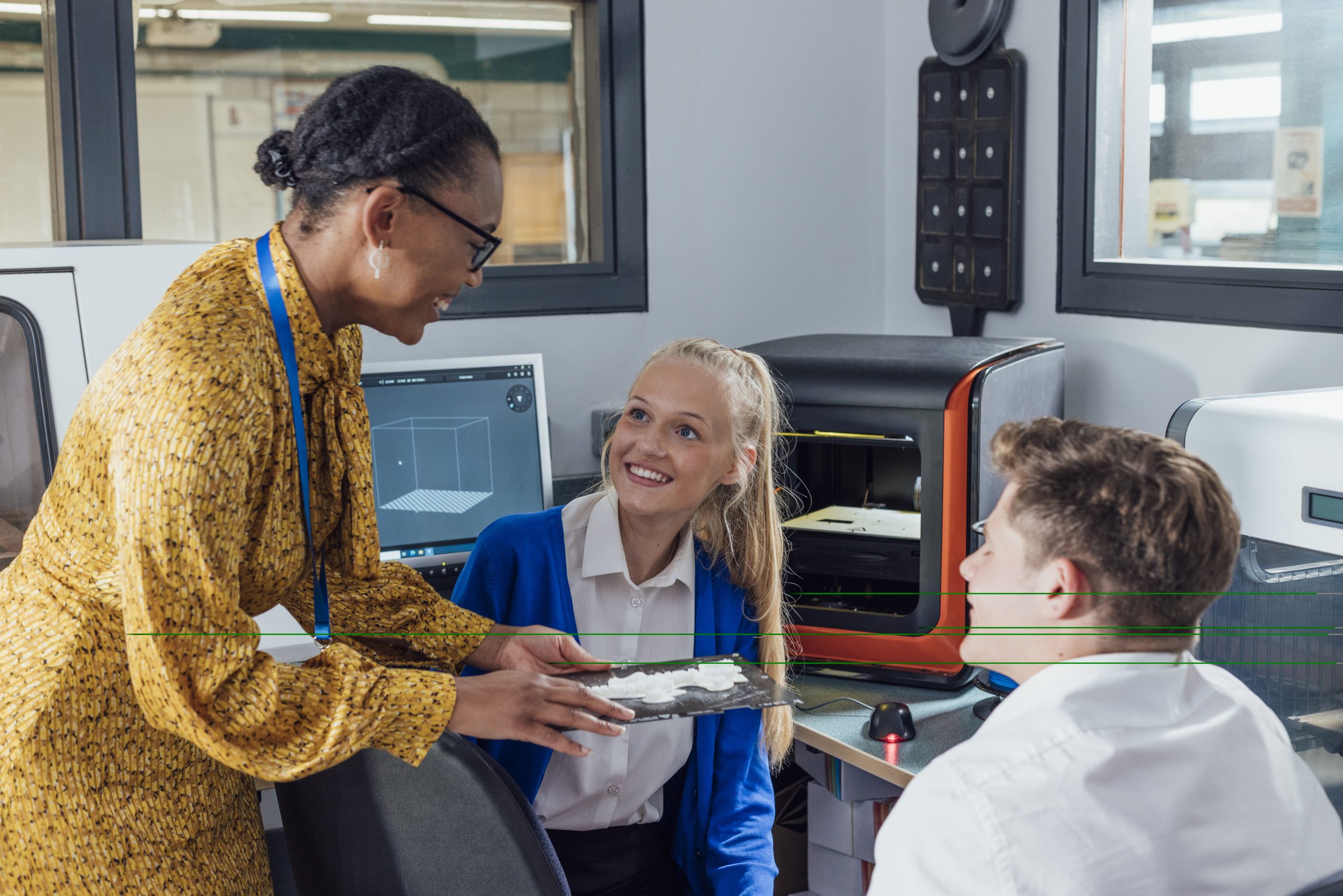
All TK-8 students receive science instruction and engage in hands-on, collaborative experiments. Cinnabar’s buddy science classes allow older classmates to partner with younger students in their science, technology and engineering activities, enhancing learning for all. Students also participate in Maker, robotics and coding opportunities.
CSBA Public Affairs and Community Engagement Representative Carrie Castro toured the school and spoke to Superintendent-Principal Jamie Azevedo and sixth-grade STEAM teacher Mark Riberiro about the program, which was launched about a decade ago, and how the district is working to reinvigorate it. CSBA is recognizing the work of small districts through the Small Schools, Big Ideas blog series.
Riberiro explained and showed off student projects including a charging box for electronic devices that students independently sourced the materials for, cut and assembled components, and wired independently. Students have also engineered automobile models using laptop-based instructions — working both individually and collaboratively; deconstructed an old fence and repurposed donated pallet wood to construct outdoor school furniture, including swings and lounge chairs, while learning to safely use construction tools; created a three-dimensional astronomy presentation using a computer they built from scratch; and designed and built speaker boxes using a laser cutter and other tools.
Students have also developed a small business selling T-shirts, Riberiro said. They not only created and presented a business plan with cost and profit analysis, but after approval, they sourced materials, designed and printed artwork, and sold the shirts at school.
“What I’d like to see at Cinnabar would be that all of the students in the classroom would be utilizing this STEAM space,” Ribeiro said. “And I’d also like to see the program being integrated into the existing curriculum, so that … we’re building the children’s love of learning and finding a way for them to see how the world doesn’t work in compartments, and how they can explore whatever interest they have; how it’s all connected to their current life.”
The following conversation with Azevedo has been edited for clarity.
Can you explain how the program works and why it was started?
This was started with some startup grant monies in the past. Once we added middle school to the campus, we wanted to have more hands-on activities and add new equipment to the school.
What short- and long-term outcomes would CESD like to see among students who participate in the program?
We would like to see an increase in student learning and engagement.
What challenges has the district experienced when it comes to the program and how did you overcome them?
Challenges have been in how to manage the program when you do not have a staff member dedicated to the space or program. All teachers are teaching their multiple subject classes all day.
How has CESD benefited from the program?
There’s been increased engagement and excitement towards learning. Students who sometimes do not shine in traditional classrooms shine in the STEAM lab and become experts to their peers.
What plans does the district have for the program moving forward?
Our goal is to have each classroom use the lab for an extended period of time working on various projects. We are brainstorming how to manage a larger group in a room where there are sometimes limited tools.
What advice do you have for other small LEAs that want to establish a program like this?
Take the leap, purchase simple tools first and start there. Teach all kids how to use a hammer, then a screwdriver, hot glue gun, etc. Eventually, they will feel successful and they will want to learn more and try more. Now more than ever, kids need to be using their hands and creating.
Who should other small LEAs contact with questions and/or to schedule a visit?
Superintendent-Principal Jamie Azevedo: jazevedo@cinnabar.org